Health insurance and personal accident insurance are both essential financial tools in Thailand. While they might seem interchangeable at first glance, they serve very different purposes and offer different types of benefits. One is a broad shield against illness and injury, while the other is specially meant for the unexpected impact of an accident. This guide explains how each policy works and how they can be used together to cover gaps in your insurance portfolio.
What is health insurance?
Health insurance is a comprehensive medical contract that manages the financial risks associated with a wide range of healthcare needs. Health insurance provides broad protection that covers medical costs arising from both natural illnesses and physical injuries. It serves as a primary source of funding for professional medical care, ensuring that policyholders can access necessary treatments without bearing the full cost of hospital bills.
Core coverage areas:
- Illness and disease: Coverage includes common infections, viral fevers, and serious conditions like cancer or heart disease.
- Inpatient & outpatient (IPD/OPD): Most plans focus on IPD (hospitalisation), but many in Thailand offer OPD add-ons for clinic visits.
- Preventative care: Higher-tier plans may include annual check-ups and vaccinations.
- Waiting periods: Most health policies in Thailand include a waiting period. This is usually 30 days for general illnesses and up to 120 days for specific chronic conditions.
What is personal accident (PA) insurance?
Personal accident insurance is a specialised policy that provides financial compensation for physical injuries, disability, or death resulting specifically from accidental events. This coverage is strictly event-driven and does not provide benefits for medical conditions caused by sickness, disease, or natural causes. This insurance is often used as a supplement to existing health plans because of its low cost and specific payout structures.
Core coverage areas:
- Accidental medical expenses: This covers the cost of treating injuries resulting from a sudden external event.
- Death and disability: The insurer pays a lump sum benefit if an accident leads to death or permanent disability.
- Daily hospital income: Many Thai PA policies pay a fixed daily cash amount while the insured person is hospitalised for an injury.
- No waiting periods: Coverage for accidents typically begins immediately once the policy is issued and the premium is paid.
What qualifies as an accident?
For an event to be covered under a PA policy in Thailand, it must generally be sudden, unforeseen, and caused by an external force. Common examples of covered events include:
- Home and everyday mishaps: Slipping on a wet floor, falling down the stairs, or accidental cuts while cooking.
- Road accidents: Injuries sustained as a driver, passenger, or pedestrian in a vehicle collision.
- Animal and insect encounters: Bites from dogs, cats, or venomous insects that require immediate medical attention (e.g., rabies or tetanus shots).
- Sports and leisure: Non-professional sports injuries, such as a sprained ankle during a football match or a fall while jogging.
Read more: 10 Minor Injuries Covered by PA Insurance
Key differences between PA and health insurance
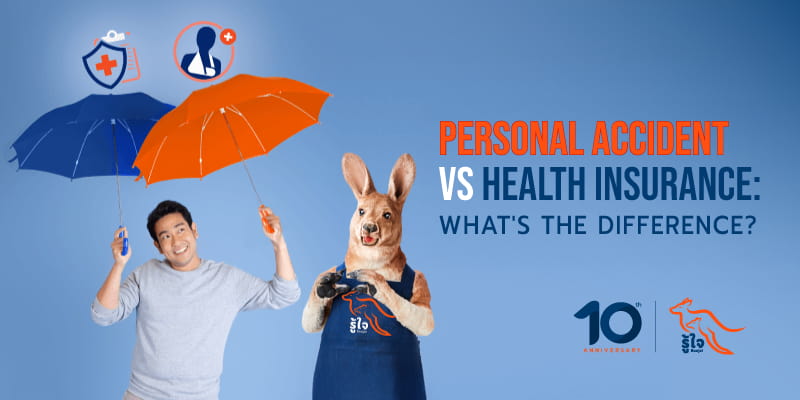
While both policies provide financial support for medical care, they are governed by different sets of standards under the Office of Insurance Commission (OIC) regulations. Health insurance acts as a broad “medical umbrella,” whereas personal accident insurance is only for injury-related risks.
Understanding the technical differences between these two products is essential for choosing the right level of protection. The table below summarises the primary distinctions based on Thai insurance standards.
| Feature | Health Insurance | Personal Accident (PA) |
| Scope of protection | Illness, disease, and accidents | Accidents and injuries only |
| Lump sum payouts | Payment varies according to the product, coverage, or plan | Standard for death and disability |
| Premium costs | Higher and increases with age | Lower and often fixed based on occupation |
| Medical examination | Frequently required for new applicants | Rarely required |
| Waiting period | 30 to 120 days for illnesses | No waiting period for accidents |
| Claim frequency | Multiple claims for various illnesses | Claims only for accidental events |
Why health insurance isn’t always enough
While health insurance provides a broad foundation, it does not always cover every financial risk. Personal accident insurance fills specific gaps that a standard medical policy might leave open.
High deductibles and out-of-pocket costs
Many health insurance plans in Thailand includes a deductible. This is the amount the policyholder must pay before the insurance coverage begins. A personal accident policy can be used to cover this deductible.* This strategy reduces the total financial burden on the individual after an injury.
*This strategy only works for accidents. If you are hospitalised for an illness (like the flu or surgery for appendicitis), a PA policy cannot be used to cover the health insurance deductible, as PA policies specifically exclude sickness. For illnesses, you would still be responsible for the deductible out-of-pocket.
Loss of income and disability
Health insurance pays the hospital directly for medical bills. However, it does not provide a financial safety net if an injury prevents you from working. Personal accident insurance offers a lump sum payment for total or partial disability. This cash can be used for living expenses, home modifications, or debt repayments.
Specialised coverage for high-risk activities
Standard health insurance policies often have exclusions or limited coverage for specific activities common in Thailand. This includes riding motorcycles or participating in certain sports. Many personal accident policies allow for specific riders to include these risks. This ensures that the medical expenses from a road accident are fully covered.
Can I claim both health and personal accident insurance?
It is possible to hold both types of policies and coordinate benefits between them. However, the ability to claim from multiple sources depends on whether the benefit is a reimbursement of actual costs or a fixed-sum payout.
Claiming for medical bills
Under Thai law, you cannot receive more money than the actual cost of your medical treatment. For example, if you have a THB 50,000 bill and two policies (e.g., a Health policy and a PA policy), you must submit the original receipt to the first insurer. If they pay the full THB 50,000, your “loss” is settled. You cannot then use a copy of that receipt to claim another THB 50,000 from the second insurer, as you would be “profiting” from the accident.
In practice, you use your primary health insurance to pay the bill first. If your health insurance has a limit or a deductible, you can then use your PA insurance to cover the remaining balance.
Claiming fixed cash benefits
The rules are different for benefits that pay a set amount of money. You are permitted to claim the full amount from every policy you own for the following:
- Daily hospital income: If you have two policies that each pay THB 2,000 per day for a hospital stay, you will receive a total of THB 4,000 per day.
- Death and disability: According to OIC standards, payouts for accidental death or permanent disability are fixed sums. These are paid in full by every insurer regardless of any other coverage you may have.
Who should prioritise which policy?
Your choice between health and personal accident insurance often depends on your current life stage and daily activities in Thailand. Below are three common personas and the recommended insurance mix for each.
The daily commuter or motorcyclist
Thailand has a high rate of road traffic accidents, particularly involving motorcycles. If you commute daily by bike or car, a personal accident policy is a high priority.
Why: Standard car insurance, like the compulsory insurance or Por Ror Bor, has low medical limits for the at-fault driver (often capped at THB 30,000). A standalone PA policy provides a much higher limit for medical expenses and offers a lump-sum payout for disability that car insurance may not fully cover.
Employees with Social Security and group insurance
If you work for a company in Thailand, you are likely covered by Social Security and potentially a group health insurance policy provided by your employer. These provide a foundation for medical care, but they often come with limitations
Why: While these provide a baseline of care, they often involve long wait times or low outpatient (OPD) limits that may not cover the full cost of a private emergency room visit. Adding a private personal accident policy allows you to seek immediate treatment at premium private hospitals for injuries without paying out of pocket.
Read more: Individual vs Group Health Insurance
Primary income earners and breadwinners
If your family relies on your monthly income, health insurance alone may not be sufficient.
Why: Health insurance pays the hospital, but it does not pay your family if you are unable to work. For a breadwinner, personal accident insurance is a critical “income protection” tool. The lump-sum payout in the event of a serious accident ensures your family can manage debt and living costs.

How to choose the right health coverage in Thailand
Use the following checklist to evaluate your current protection levels and decide how to allocate your budget.
1. Check your existing coverage
Review your Social Security benefits or any group insurance provided by your employer. Identify the limits for outpatient (OPD) accident visits. If the limit is below THB 2,000 per visit, you may face out-of-pocket costs for minor injuries.
2. Evaluate your daily risks
If you engage in high-risk hobbies like scuba diving, mountain biking, or frequent travel, a personal accident policy is essential. These policies are generally more affordable than upgrading a comprehensive health plan to cover high-risk activities.
3. Consider your age and health status
Health insurance premiums increase with age and require a medical history declaration. Personal accident insurance premiums are usually fixed regardless of age and do not require a physical exam. If you are on a tight budget, a PA policy is an affordable starting point for private medical protection.
4. Compare the total costs
In Thailand, a basic personal accident policy can cost as little as THB 500 per year. A comprehensive health insurance plan is more expensive and varies based on age. Many residents choose a high-quality PA policy alongside a health plan with a deductible to keep the total cost manageable.
Why choose Roojai for personal accident insurance?
Roojai provides flexible personal accident insurance designed for the specific needs of people living in Thailand. You can customise your coverage to ensure you only pay for the protection you actually need.
- Customisable coverage: Adjust your medical expense limits and add specific benefits, such as coverage for motorcycle accidents or extreme sports.
- Instant online application: Get covered in minutes with no medical check-up required and immediate policy issuance.
- Convenient claims: Access over 600 hospitals across Thailand with no need to pay out of pocket using your digital Roojai Care Card.
- Daily income benefit: Receive a fixed daily cash payment during hospitalization to help cover your living expenses.
Whether you need a standalone policy or a supplement to your existing health insurance, Roojai offers an affordable way to secure your financial future against unexpected accidents.
Final thoughts
Personal accident insurance and health insurance are complementary tools that provide different types of financial protection. While health insurance handles the high costs of illness and long-term medical care, personal accident insurance offers a targeted, affordable safety net for injuries and income loss. Maintaining both ensures that an unexpected medical event does not impact your financial stability in Thailand.
If you are unsure where to start or need help understanding which type of plan suits your lifestyle, Roojai is here to help. We offer simple, affordable, and reliable personal health coverage and auto insurance.
Want more tips and updates on all things insurance? Follow Roojai on Facebook or add us on LINE for expert insights and useful content delivered straight to your feed.